

RCA interfész
First of all, RCA interfaces are very common in our daily life, such as speakers, TVs, power amplifiers and other equipment. The RCA interface is named after the Radio Corporation of America, which introduced the interface to the market in the 1940s and used it to connect devices such as phonographs and speakers. Therefore, the RCA interface is also known as the PHONO interface in Europe and the United States, which is also commonly known as the "Lotus interface".

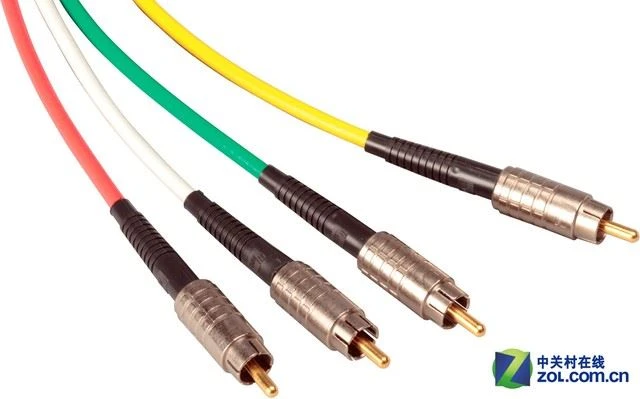
Ami a jelátvitelt illeti, az RCA interfész a jelek koaxiális átvitelének módszerét alkalmazza, a központi tengelyt a jelek továbbítására, a külső él körüli érintkezési réteget pedig a földelésre használják. Minden RCA kábel egy csatorna audiojelének továbbításáért felelős, így a felhasználók a csatornák számának megfelelő RCA kábeleket használhatják a használt csatornák igényei szerint. Például, ha két{0}}csatornás sztereó rendszert szeretnénk kialakítani, két RCA-kábelre van szükségünk.
XLR interfész
XLR connectors are also known as "cannons" because Cannon Electric, founded by James H. Cannon, was its original manufacturer. Their earliest product was the "cannon X" series, and later the improved product added a locking device (Latch), so an "L" was added after the "X". Later, a rubber compound (Rubber compound) was added around the metal contacts of the connector, so an "R" was added after the "L". Therefore, people later combined these three capital letters and named it the XLR interface.


Az XLR csatlakozók általában 3-tűsek, természetesen van 2-tűs, 4-tűs, 5 tűs, 6 tűs. Például néhány csúcskategóriás fejhallgató-kábelben gyakran látunk négy tűs XLR szimmetrikus csatlakozókat. Az XLR interfész megegyezik a "nagy hárommagos" TRS interfésszel, amely hangkiegyensúlyozott jelek továbbítására használható.
Since the balanced signal is mentioned, let's briefly talk about the balanced signal and the unbalanced signal: after the sound wave is converted into an electrical signal, if it is transmitted directly, it is an unbalanced signal; if the original signal is inverted 180 degree , and then the original signal is transmitted at the same time. signal and an inverted signal, then this is a balanced signal. Balanced transmission is to use the principle of phase cancellation to minimize other interferences in the audio signal transmission process (to achieve clearer sound quality). Of course, the XLR interface mentioned above is also the same as the "big three-core" TRS interface, which can transmit unbalanced signals; therefore, if we look at the interface alone, it is basically impossible to see whether it transmits balanced signals or unbalanced signals.


